
Top Nails nail care guide
Nail Art Consultations: How to Use Inspiration Photos
Use nail-art inspiration photos as communication tools, not identical-result guarantees. Identify the must-have color, shape, motif, tip style, and accent placement, then let the design adapt to your nail size, chosen product, and appointment scope.
Published by Top Nails Editorial Team · August 3, 2026
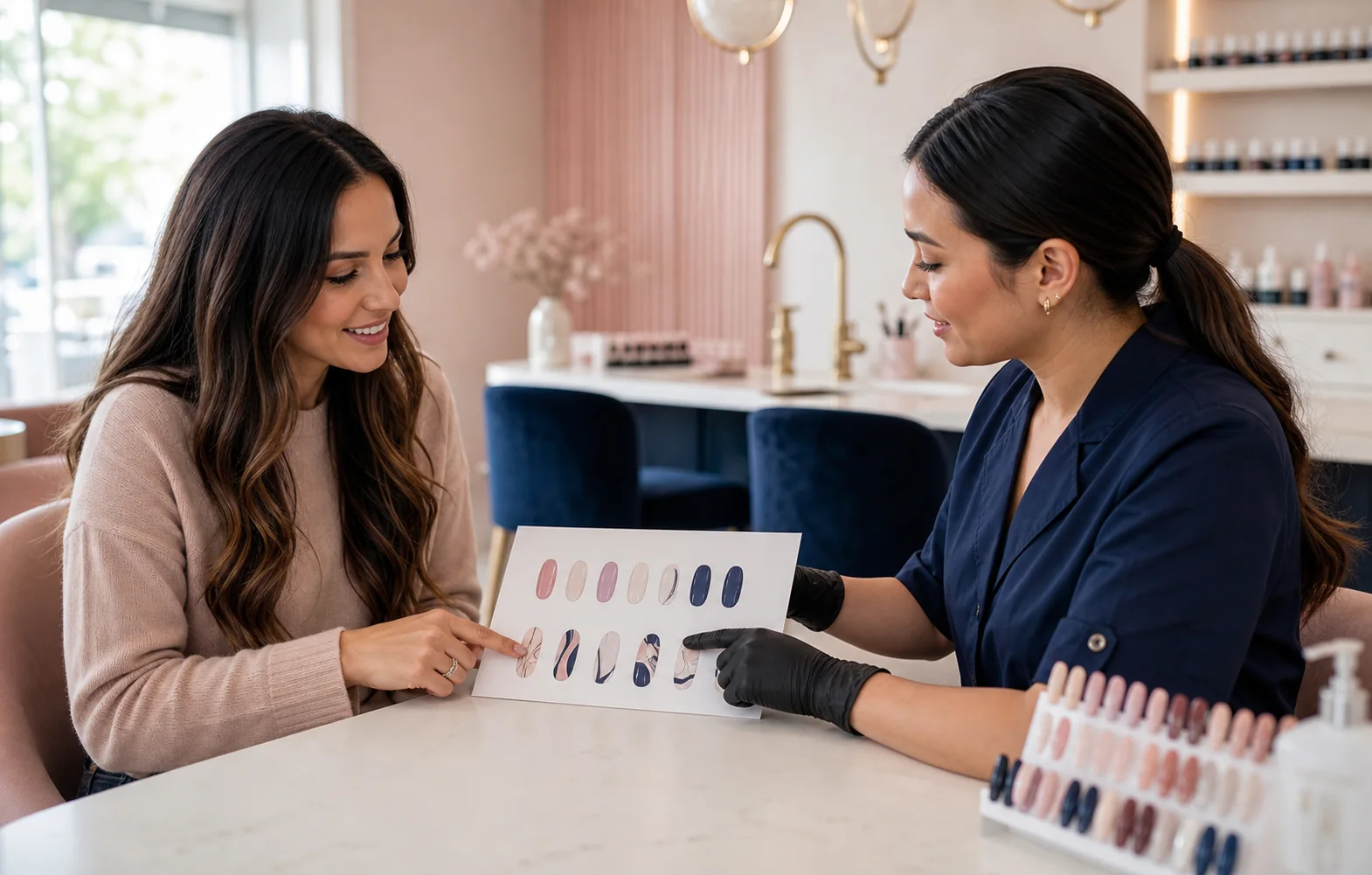
What makes an inspiration photo useful?
A useful image is clear, well lit, and shows the full set from an angle that reveals shape and length. Save a second close-up if fine lines or texture are essential.
Avoid presenting ten unrelated images without priorities. Choose one main direction and identify one or two optional details.
Which design details should you name?
Name the base color, tip style, motif, number of accent nails, finish, and whether embellishment or hand painting matters. Point to the part of the image you want preserved if adaptation becomes necessary.
The same art can look different on short round nails and long square extensions. Decide the canvas as part of the design.
Why might a design need adaptation?
Nail width, length, shape, product, color availability, and time affect what can be reproduced. A narrow nail may need fewer elements; a shorter nail may need a thinner French line or simplified motif.
Adaptation is not failure when it protects the idea and creates a balanced result on the actual hand.
How should pricing and timing be discussed?
Ten detailed nails involve different work from two accents. Removal, extensions, repairs, fine lines, ombre, layered colors, and embellishments can change the scope.
Call Top Nails with the image and current product information so the salon can discuss current pricing and timing.
Eight details to include in a nail art brief
- Current product and removal needs
- Base service for the new design
- Target length and nail shape
- Primary and secondary colors
- Accent-nail placement
- The one motif or effect that matters most
- Raised, reflective, or embellished details to confirm
- The event date or everyday-use requirement
Expert insight: isolate the essential feature
A reference photo may contain ten decisions at once: base color, length, shape, line work, texture, charms, placement, and lighting effects. Identify which element makes the design recognizable to you. That gives the nail professional room to adapt less important details without losing the concept.
Availability is part of the consultation. A photo can show a specialty color, charm, transfer, or effect that is not currently stocked or may not fit the available nail surface. Discuss alternatives before application and treat the image as a shared visual language, not an exact-replica guarantee.
Event timing in College Station adds another constraint. Graduation, game-day, formal, wedding, and holiday designs may be date-sensitive, while complex art also depends on current availability and material scope. State the event and essential motif early, but do not assume that submitting a reference image reserves time or confirms every component.
If one accent nail matters most, mark it in the reference and say which hand it belongs on. That small detail prevents an avoidable placement mix-up.
Color references need context because screens, filters, lighting, and surrounding colors can change how a shade appears. If the design must coordinate with a dress, uniform, jewelry, or event color, bring that reference too. Decide whether an exact color family or the overall mood matters more. That gives the consultation room to compare available options without treating a photographed shade as a guaranteed match.
Think through the design across all ten nails. A close-up of one accent may not show how frequently the motif repeats, whether the opposite hand mirrors it, or which nails stay solid. Write down the distribution you expect: for example, one accent per hand, alternating details, or a full repeating set. Placement often changes both the visual balance and the amount of design work involved.
Which design categories does Top Nails confirm?
Top Nails confirms nail art, French manicures, manicures, extensions, acrylic nails, and dip powder nails. Those categories provide several possible bases for a design, but they do not prove that every charm, specialty effect, or exact color in a reference image is stocked. Identify the essential motif and call to confirm the current materials and service scope.
Questions about Nail Art Consultations: How to Use Inspiration Photos
Can nail art look exactly like a saved photo?
The photo guides the consultation, but nail dimensions, products, colors, and technique can require a tailored interpretation.
Should I send the photo before the appointment?
If the salon accepts advance references, sharing it can clarify complexity. Call to confirm the preferred method.
Can a salon guarantee the same charms or materials shown online?
No. Reference images may use materials that are unavailable or unsuitable for the requested nail size. Confirm important colors, effects, and embellishments before the service.
Turn inspiration into an actionable design brief
Choose a small number of coherent images, label the feature you want from each, and explain the base product, length, shape, and placement. A concise brief is easier to evaluate than a large folder of conflicting screenshots.
Send or bring that brief when discussing nail art with Top Nails. Current material availability, design scope, removal, repairs, pricing, and appointment time still need direct confirmation.