
Top Nails nail care guide
Acrylic Nail Fills: Timing, Signs, and Maintenance
An acrylic fill addresses new growth and rebalances suitable existing product. Timing depends on growth and condition; extensive lifting, cracks, missing product, discomfort, or a major shape change may require repair, removal, or a new set instead.
Published by Top Nails Editorial Team · August 3, 2026
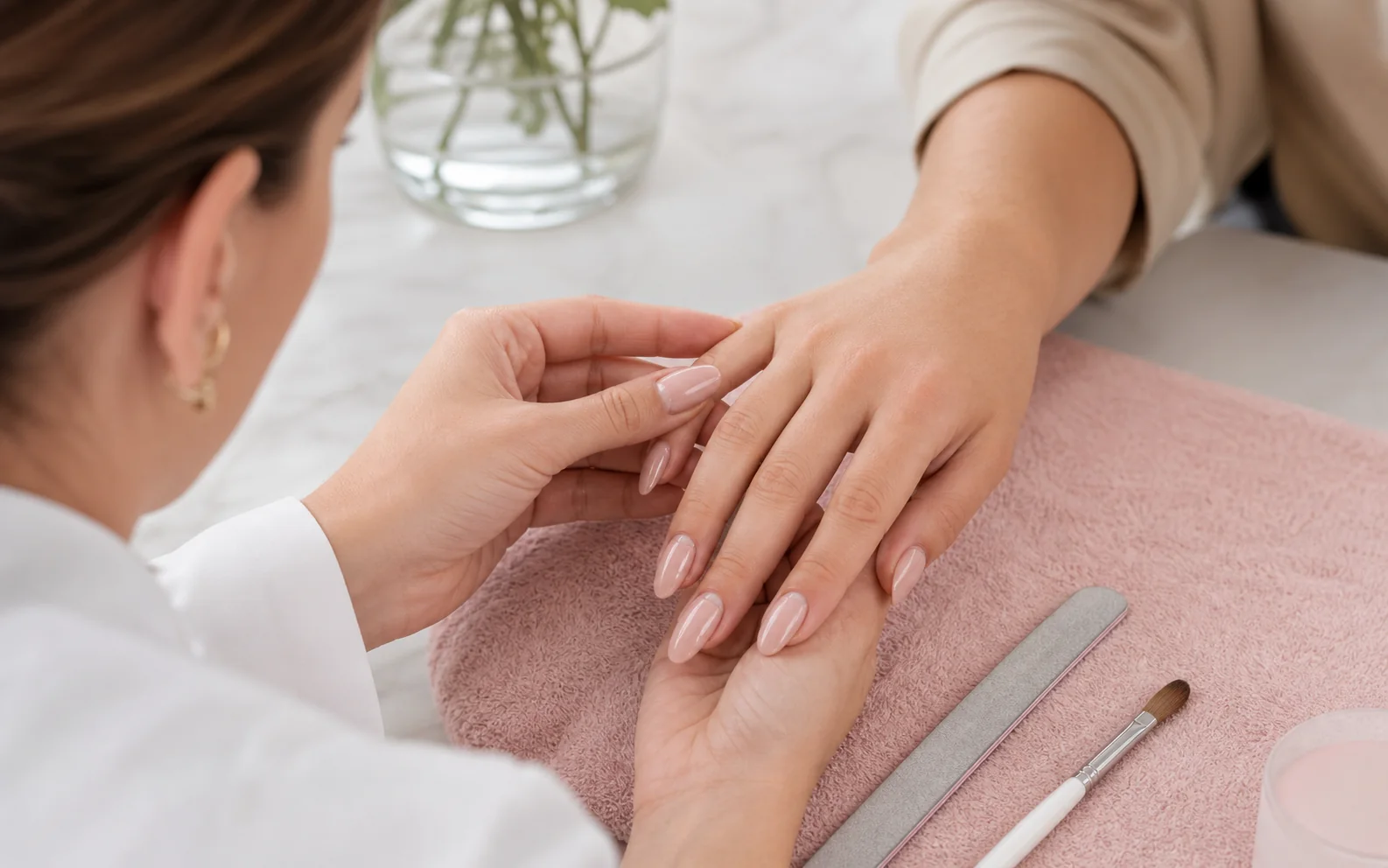
What does an acrylic fill actually do?
As the natural nail grows, a gap appears near the cuticle and the enhancement's balance changes. A fill prepares the grown-out area, addresses suitable existing material, and rebuilds the structure where needed.
A fill is not a way to hide every problem. Existing product must be assessed for lifting, cracks, impact damage, and overall suitability before more acrylic is added.
Which signs mean it is time to call?
Visible growth, a changed balance, snagging edges, or a small repair need are reasonable prompts to contact the salon. Do not wait for a nail to become badly lifted or repeatedly caught.
Pain, bleeding, persistent discoloration, or suspected infection are not routine fill issues. Seek appropriate healthcare guidance when the concern is medical rather than cosmetic.
When might a fill not be appropriate?
Extensive lifting, multiple breaks, a major length reduction, or a complete change in shape may make another service more sensible. Only an assessment of the actual set can determine the plan.
Be honest about gluing, picking, or at-home filing. That history helps the nail professional understand what has happened beneath the visible color.
How can you care for acrylic between visits?
Avoid using extensions as tools, protect hands during heavy wet work, and moisturize the cuticle area. If a nail catches, reduce further stress and contact the salon instead of pulling it.
Maintenance cost depends on condition, repairs, length, shape, design changes, and removal. Call Top Nails with the condition of your set for current details.
Six signs to discuss before an acrylic fill
- Visible new growth near the cuticle
- A changed balance as the enhancement grows forward
- Small lifting areas or snagging edges
- A crack, chip, or missing corner
- A requested change in length or shape
- Pain, bleeding, discoloration, or another non-routine concern
Expert insight: a fill is structural maintenance
A fill does more than hide a growth gap. As the natural nail advances, the enhancement's stress area and visual balance move with it. Suitable existing product must be prepared and the structure rebalanced; simply adding color near the cuticle does not address the full maintenance need.
Condition determines whether a fill is sensible. Extensive lifting, repeated breaks, a major shape change, or questionable product can point toward repair, removal, or a new set. The correct path cannot be guaranteed from an age-based schedule alone because growth and wear differ.
Before calling, note which nail is affected and whether it catches, moves, or hurts. A clear close-up photo can also make the initial conversation more useful.
Look at the set as a whole rather than measuring only the clean gap near the cuticle. Growth can shift visual weight toward the free edge, especially on longer shapes. Compare sidewalls, apex area, free edges, and any repaired nails. One nail with a crack may need a different response from nine nails with ordinary growth, and repeated lifting in the same area deserves to be mentioned instead of hidden beneath another color.
A requested redesign can also change the maintenance decision. Shortening a set, moving from a tapered shape to a square edge, removing raised art, or replacing a translucent finish with an opaque color involves more than filling visible growth. Send the desired change with the condition notes so the salon can discuss whether reshaping, repair, removal, or a new set is the more suitable service path.
How does this guide connect to Top Nails services?
Top Nails confirms acrylic nails as well as nail repair and removal. That service range matters when grown-out acrylic has more than a clean growth gap. Describe lifting, cracks, missing corners, discomfort, desired reshaping, and removal needs so the salon can discuss the appropriate current service instead of assuming every set qualifies for a fill.
Questions about Acrylic Nail Fills: Timing, Signs, and Maintenance
Is a fill the same as a new acrylic set?
No. A fill works with suitable existing acrylic and new growth. A new set creates the enhancement again after appropriate preparation or removal.
Can lifting acrylic simply be filled over?
Lifting should be assessed and addressed, not automatically covered. The extent and condition determine the appropriate cosmetic service.
Can I change color or shape during an acrylic fill?
A color or shape change may be possible, but the amount of reshaping, existing design, product condition, repairs, and length can change the service scope. Confirm the request first.
Book for the condition you have, not only the service name
When calling about a fill, describe growth, lifting, cracks, repairs, length, shape, and the design change you want. That gives the salon enough information to discuss whether existing acrylic may be maintained or needs another approach.
Call Top Nails for current acrylic maintenance details and pricing. A direct assessment is more reliable than assuming every grown-out set qualifies for the same fill service.